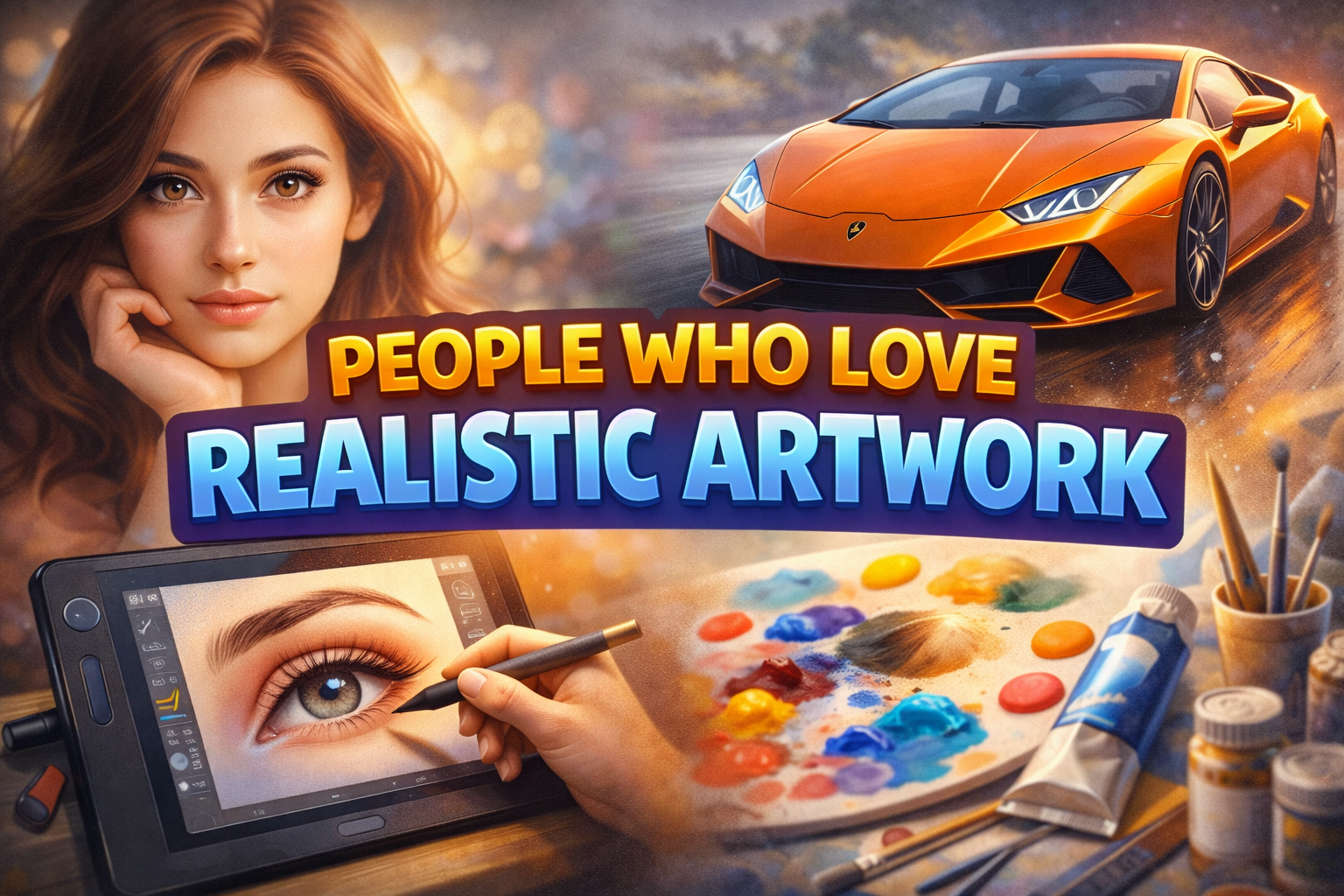
In the world of digital art and illustration, realistic artwork has a unique power to captivate audiences. Unlike stylized or abstract art, realistic art focuses on accurate details, lifelike textures, and natural lighting, making the artwork appear almost like a photograph. For many art lovers, realistic artwork offers a deeper emotional connection and an immersive visual experience.
Today, with the advancement of digital tools and creative techniques, realistic art has become an important part of modern illustration, concept art, digital painting, and commercial design. From portraits and automotive illustrations to cinematic scenes, realistic artwork continues to attract people who appreciate fine detail and visual precision.
What is Realistic Artwork?
Realistic artwork is a style of art that aims to represent subjects as accurately and naturally as possible. Artists focus on elements such as lighting, shadow, texture, proportions, and depth to create visuals that closely resemble real-life objects or environments.
This style requires strong artistic skills and a deep understanding of anatomy, perspective, and color theory. Whether created traditionally with pencil and paint or digitally using professional software, realistic artwork showcases the technical mastery and dedication of the artist.
Why People Are Drawn to Realistic Art
Many people are naturally attracted to realistic artwork because it mirrors the world around them. When viewers see a highly detailed illustration that looks real, it immediately captures their attention and curiosity.
Here are some reasons why people love realistic artwork:
Visual Authenticity
Realistic art creates the illusion of reality, making the subject feel tangible and believable.
Emotional Connection
Detailed facial expressions, textures, and lighting can evoke strong emotions and create a deeper connection between the artwork and the viewer.
Impressive Craftsmanship
Realistic artwork showcases the artist’s skill, patience, and attention to detail, which many art enthusiasts admire.
Immersive Experience
High-detail visuals allow viewers to explore the artwork closely, discovering subtle details and textures that make the piece feel alive.
Realistic Artwork in the Digital Age
With modern digital tools, realistic art has reached new levels of precision and creativity. Digital painting software, advanced rendering tools, and high-resolution displays allow artists to create artwork that rivals photography.
Digital realistic artwork is widely used in:
- Character design
- Automotive illustrations
- Concept art for films and games
- Product visualization
- Portrait commissions
- Advertising and marketing visuals
These industries rely on realistic artwork because it helps communicate ideas clearly while maintaining a strong visual impact.
Realistic Artwork and Branding
Many brands and creative studios are now incorporating realistic illustrations into their marketing strategies. Realistic visuals can make promotional content look more premium, professional, and engaging.
For example, realistic artwork can be used in:
- Social media campaigns
- Website banners
- Promotional posters
- Product presentations
These visuals not only attract attention but also help brands build credibility and visual trust with their audience.
The Growing Community of Realistic Art Lovers
Across social media platforms, art communities dedicated to hyper-realistic drawings, digital paintings, and photorealistic illustrations are growing rapidly. Artists share their work, techniques, and creative processes with audiences who admire the dedication behind each piece.
People who love realistic artwork often appreciate the time, patience, and technical expertise required to create such detailed visuals.
Conclusion
Realistic artwork continues to inspire artists and audiences around the world. Its ability to replicate life with incredible detail makes it one of the most admired styles in both traditional and digital art.
For art lovers, realistic artwork is more than just a visual style — it is a celebration of skill, patience, and artistic precision.
As digital tools evolve and creative communities expand, the demand for high-quality realistic artwork, digital realism, and detailed illustration will continue to grow in the world of art, design, and digital media.
Leave a Reply