Category: Artworks

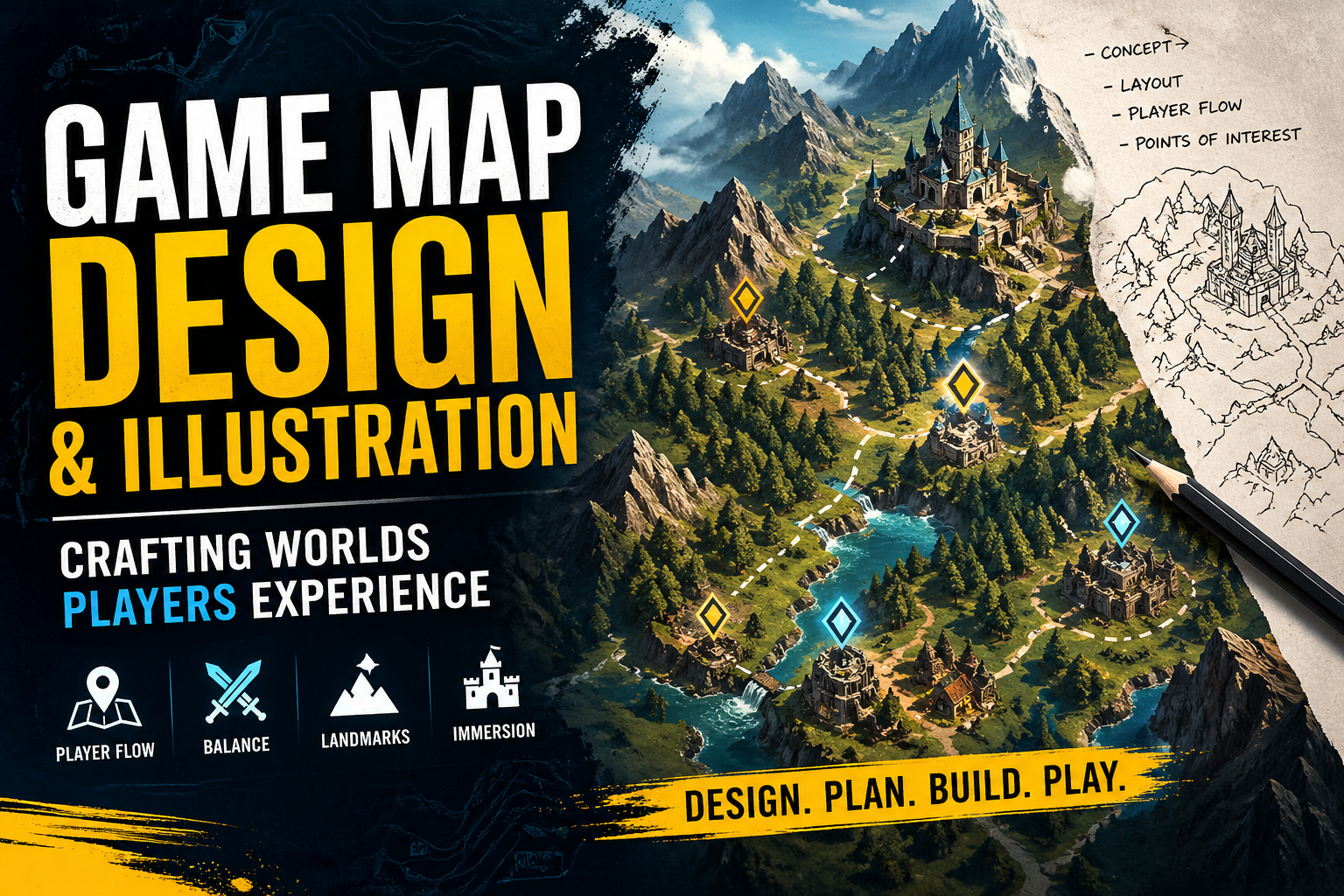
  • Game Map Design & Illustration: Crafting Worlds Players Experience

    Game Map Design & Illustration: Crafting Worlds Players Experience

    In game development, the map is far more than a visual backdrop it’s the foundation of the player’s entire experience. A well designed map shapes how players move, interact, and feel within a game. It controls pacing, builds immersion, and often tells a story without using a single line of dialogue.

    Game map design sits at the intersection of art and strategy. It requires not only creative vision but also a deep understanding of player psychology and gameplay mechanics.


    The Role of Map Design in Games

    Every successful game map serves a purpose beyond aesthetics. It guides players naturally through the environment, helping them understand where to go without relying heavily on instructions or UI elements.

    For example, narrow pathways can create tension and urgency, while open environments encourage exploration and freedom. Lighting, color contrast, and environmental details subtly influence player decisions. A well crafted map communicates direction, danger, and opportunity all through design.


    Types of Game Maps

    Different types of games require different map structures, each designed to support specific gameplay experiences.

    Open World Maps offer large, explorable environments where players can roam freely. These maps focus on discovery, side quests, and immersion.

    Linear Maps are structured and controlled, guiding players through a fixed path. They are commonly used in story driven games where pacing and narrative are key.

    Multiplayer Maps are built for balance and fairness. Every angle, route, and spawn point is carefully designed to ensure competitive integrity.

    Isometric or Strategy Maps provide a top down or angled view, allowing players to manage resources, plan movements, and control multiple elements at once.


    Core Principles of Effective Game Map Design

    Player Flow is one of the most critical elements. A good map intuitively directs players using environmental cues such as lighting, pathways, and object placement.

    Balance and Fairness are essential, especially in competitive environments. No area should provide an unfair advantage, and every route should present both risks and rewards.

    Environmental Storytelling adds depth to the map. Small details like broken structures, weather effects, or scattered objects can reveal the history and mood of the world.

    Landmarks and Recognition help players navigate easily. Memorable locations reduce confusion and improve the overall experience.

    Scale and Proportion ensure immersion. Objects and spaces must feel realistic relative to the player’s character and movement.


    The Map Design Process

    Creating a game map is a structured and iterative process.

    It begins with concept development, where the theme and purpose of the map are defined. Designers then move to greyboxing, building a rough layout using simple shapes to test gameplay flow without distractions.

    Once the layout is functional, the map enters the detailing phase, where textures, lighting, and assets are added. This is followed by playtesting, where designers observe how players interact with the map and identify issues.

    Finally, through continuous iteration, the map is refined until it delivers a smooth and engaging experience.


    Tools Used in Game Map Design

    Modern game map design relies on powerful tools to bring ideas to life. Engines like Unreal Engine and Unity are widely used for building interactive environments. For asset creation and detailing, designers often use Blender and Adobe Photoshop.

    These tools allow designers to combine creativity with technical precision, resulting in immersive and functional game worlds.


    Emerging Trends in Game Map Design

    Game maps continue to evolve alongside technology and player expectations. Procedural generation is enabling endless variations of maps, increasing replayability. Vertical level design is adding new layers of strategy and movement. Dynamic environments, such as changing weather and destructible elements, are making maps feel more alive.

    Additionally, many games are moving toward minimal UI design, allowing the environment itself to guide players instead of relying on markers or instructions.


    Conclusion

    Game map design is not just about creating spaces it’s about shaping experiences. A great map influences how players think, move, and feel. It becomes a silent storyteller, guiding the player while maintaining immersion.
  • Why People Love Realistic Artwork: The Beauty of Detail and Visual Authenticity

    Why People Love Realistic Artwork: The Beauty of Detail and Visual Authenticity

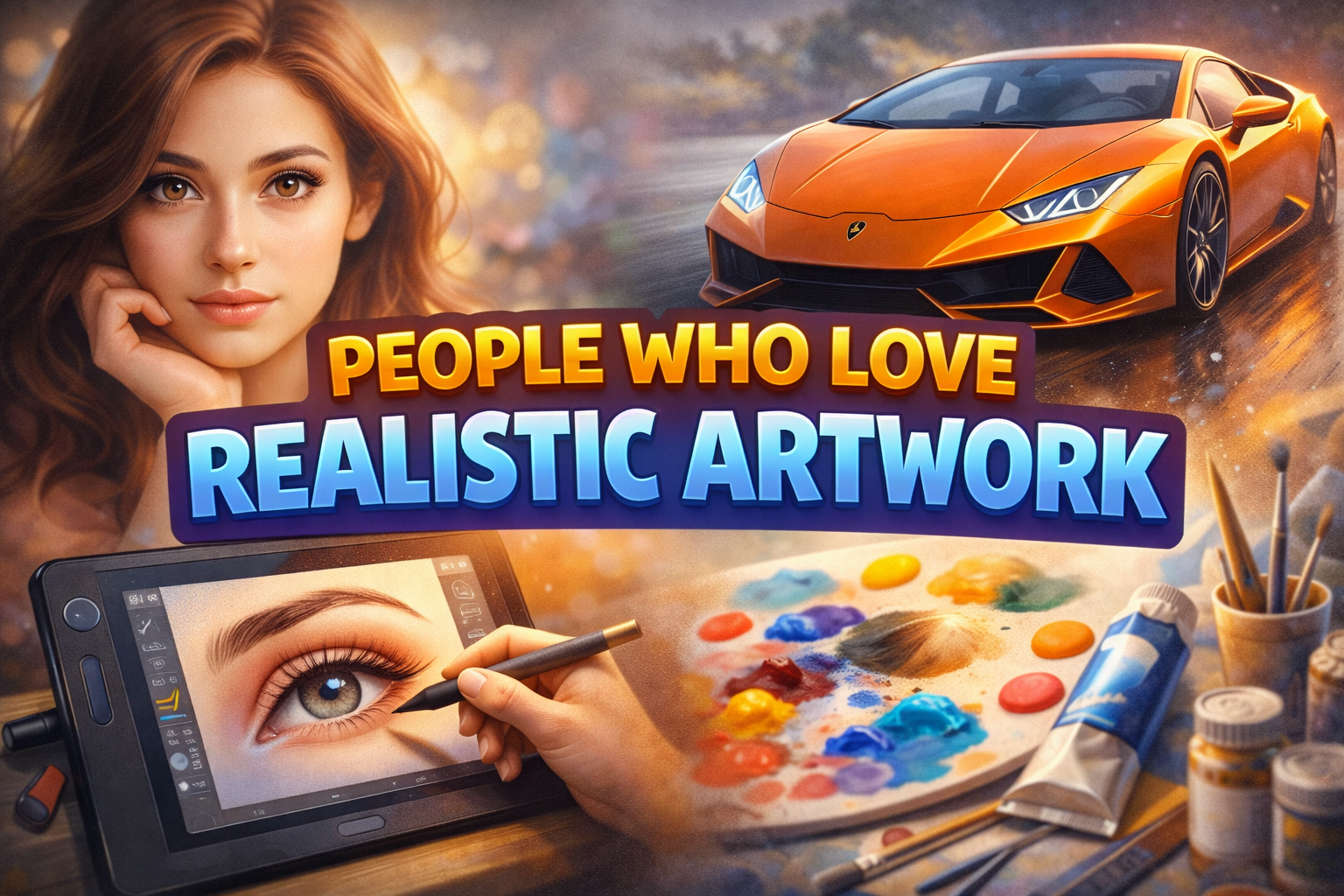
    In the world of digital art and illustration, realistic artwork has a unique power to captivate audiences. Unlike stylized or abstract art, realistic art focuses on accurate details, lifelike textures, and natural lighting, making the artwork appear almost like a photograph. For many art lovers, realistic artwork offers a deeper emotional connection and an immersive visual experience.

    Today, with the advancement of digital tools and creative techniques, realistic art has become an important part of modern illustration, concept art, digital painting, and commercial design. From portraits and automotive illustrations to cinematic scenes, realistic artwork continues to attract people who appreciate fine detail and visual precision.

    What is Realistic Artwork?

    Realistic artwork is a style of art that aims to represent subjects as accurately and naturally as possible. Artists focus on elements such as lighting, shadow, texture, proportions, and depth to create visuals that closely resemble real-life objects or environments.

    This style requires strong artistic skills and a deep understanding of anatomy, perspective, and color theory. Whether created traditionally with pencil and paint or digitally using professional software, realistic artwork showcases the technical mastery and dedication of the artist.

    Why People Are Drawn to Realistic Art

    Many people are naturally attracted to realistic artwork because it mirrors the world around them. When viewers see a highly detailed illustration that looks real, it immediately captures their attention and curiosity.

    Here are some reasons why people love realistic artwork:

    Visual Authenticity
    Realistic art creates the illusion of reality, making the subject feel tangible and believable.

    Emotional Connection
    Detailed facial expressions, textures, and lighting can evoke strong emotions and create a deeper connection between the artwork and the viewer.

    Impressive Craftsmanship
    Realistic artwork showcases the artist’s skill, patience, and attention to detail, which many art enthusiasts admire.

    Immersive Experience
    High-detail visuals allow viewers to explore the artwork closely, discovering subtle details and textures that make the piece feel alive.

    Realistic Artwork in the Digital Age

    With modern digital tools, realistic art has reached new levels of precision and creativity. Digital painting software, advanced rendering tools, and high-resolution displays allow artists to create artwork that rivals photography.

    Digital realistic artwork is widely used in:

    • Character design
    • Automotive illustrations
    • Concept art for films and games
    • Product visualization
    • Portrait commissions
    • Advertising and marketing visuals

    These industries rely on realistic artwork because it helps communicate ideas clearly while maintaining a strong visual impact.

    Realistic Artwork and Branding

    Many brands and creative studios are now incorporating realistic illustrations into their marketing strategies. Realistic visuals can make promotional content look more premium, professional, and engaging.

    For example, realistic artwork can be used in:

    • Social media campaigns
    • Website banners
    • Promotional posters
    • Product presentations

    These visuals not only attract attention but also help brands build credibility and visual trust with their audience.

    The Growing Community of Realistic Art Lovers

    Across social media platforms, art communities dedicated to hyper-realistic drawings, digital paintings, and photorealistic illustrations are growing rapidly. Artists share their work, techniques, and creative processes with audiences who admire the dedication behind each piece.

    People who love realistic artwork often appreciate the time, patience, and technical expertise required to create such detailed visuals.

    Conclusion

    Realistic artwork continues to inspire artists and audiences around the world. Its ability to replicate life with incredible detail makes it one of the most admired styles in both traditional and digital art.

    For art lovers, realistic artwork is more than just a visual style — it is a celebration of skill, patience, and artistic precision.

    As digital tools evolve and creative communities expand, the demand for high-quality realistic artwork, digital realism, and detailed illustration will continue to grow in the world of art, design, and digital media.

  • Why Custom Art Is the New Brand Currency in 2026

    Why Custom Art Is the New Brand Currency in 2026

    In a world flooded with AI-generated visualIn 2026, visual saturation has reached a breaking point. AI tools can generate logos, illustrations, and ad creatives in seconds. Stock libraries are infinite. Templates are everywhere.

    And that’s exactly why custom artwork has become a competitive advantage.

    When everyone has access to fast visuals, differentiation becomes scarce. The brands that win are the ones building visual assets they actually own — not borrowed aesthetics.

    Custom art is no longer decoration. It’s brand infrastructure.

    The Shift: From “Design” to “Intellectual Property”

    When a company invests in:

    • Custom comics
    • Illustrated mascots
    • Branded digital art systems
    • Unique character design
    • Proprietary visual worlds

    They are building long-term intellectual property.

    Look at Duolingo. The Duo owl isn’t just a mascot — it’s a personality, a meme machine, and a marketing engine.

    Or Discord. Their Clyde character and playful illustration system create instant recognizability across product, social media, and campaigns.

    You can recognize them in milliseconds — even without reading the brand name.

    That’s not design.

    That’s ownership.

    Why Custom Visual Identity Performs Better

    When brands rely on stock graphics and AI-generated trends, three problems happen:

    1. Visual sameness — Your brand blends into the scroll.
    2. No asset equity — You don’t own a recognizable character or visual language.
    3. Short-term branding — Trends age fast.

    Custom art solves this.

    ✔ It builds intellectual property
    ✔ It creates long-term visual consistency
    ✔ It increases shareability
    ✔ It strengthens emotional recognition
    ✔ It improves brand recall

    People remember characters.
    People remember stories.
    People don’t remember templates.

    The Emotional Advantage

    Custom art humanizes a brand. It creates personality where there would otherwise be corporate neutrality.

    In an AI-heavy world, handcrafted identity signals effort, intention, and confidence.

    And in 2026, confidence converts.

    If your visuals look like everyone else’s, your brand feels like everyone else’s.