Category: Designs

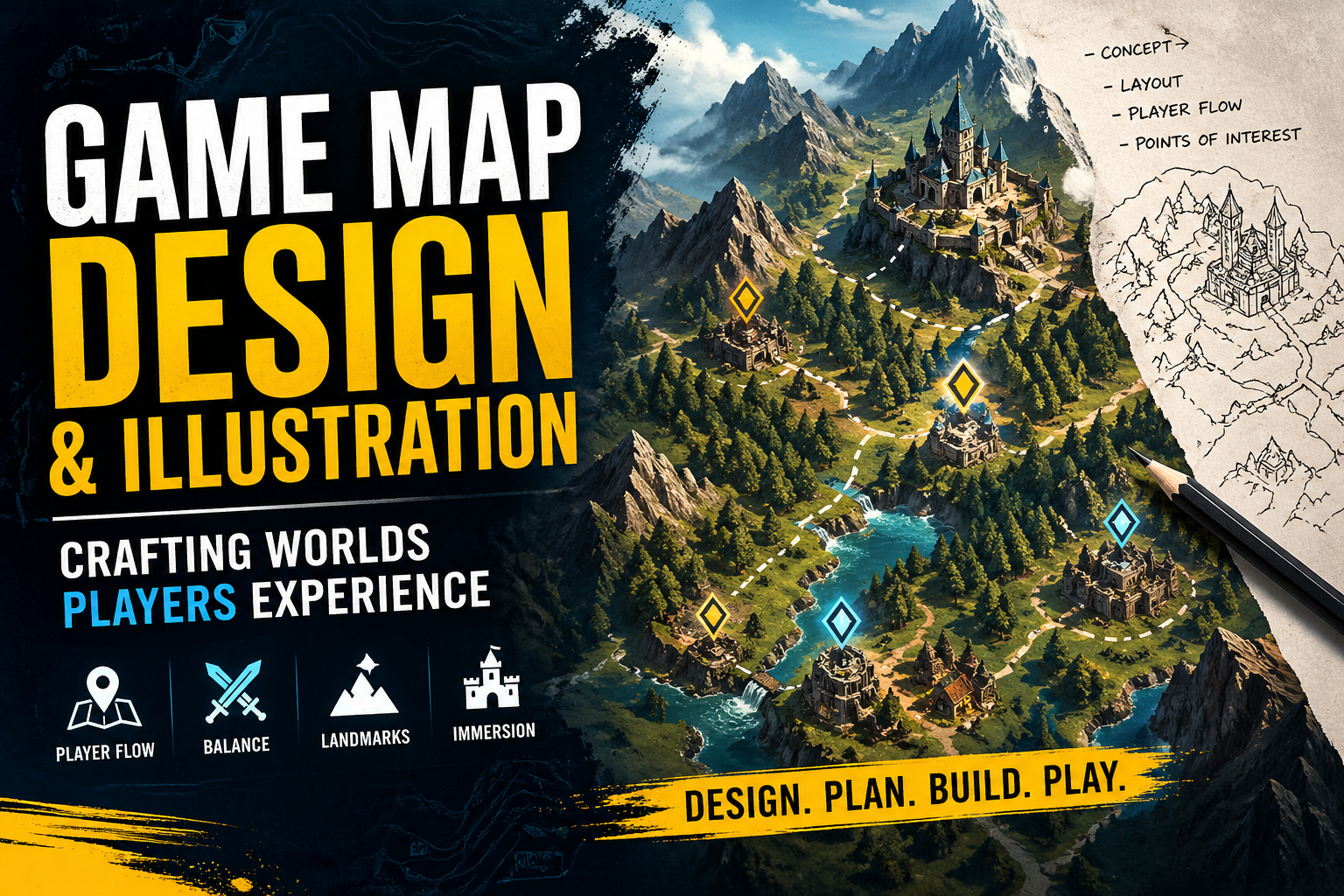
  • Game Map Design & Illustration: Crafting Worlds Players Experience

    Game Map Design & Illustration: Crafting Worlds Players Experience

    In game development, the map is far more than a visual backdrop it’s the foundation of the player’s entire experience. A well designed map shapes how players move, interact, and feel within a game. It controls pacing, builds immersion, and often tells a story without using a single line of dialogue.

    Game map design sits at the intersection of art and strategy. It requires not only creative vision but also a deep understanding of player psychology and gameplay mechanics.


    The Role of Map Design in Games

    Every successful game map serves a purpose beyond aesthetics. It guides players naturally through the environment, helping them understand where to go without relying heavily on instructions or UI elements.

    For example, narrow pathways can create tension and urgency, while open environments encourage exploration and freedom. Lighting, color contrast, and environmental details subtly influence player decisions. A well crafted map communicates direction, danger, and opportunity all through design.


    Types of Game Maps

    Different types of games require different map structures, each designed to support specific gameplay experiences.

    Open World Maps offer large, explorable environments where players can roam freely. These maps focus on discovery, side quests, and immersion.

    Linear Maps are structured and controlled, guiding players through a fixed path. They are commonly used in story driven games where pacing and narrative are key.

    Multiplayer Maps are built for balance and fairness. Every angle, route, and spawn point is carefully designed to ensure competitive integrity.

    Isometric or Strategy Maps provide a top down or angled view, allowing players to manage resources, plan movements, and control multiple elements at once.


    Core Principles of Effective Game Map Design

    Player Flow is one of the most critical elements. A good map intuitively directs players using environmental cues such as lighting, pathways, and object placement.

    Balance and Fairness are essential, especially in competitive environments. No area should provide an unfair advantage, and every route should present both risks and rewards.

    Environmental Storytelling adds depth to the map. Small details like broken structures, weather effects, or scattered objects can reveal the history and mood of the world.

    Landmarks and Recognition help players navigate easily. Memorable locations reduce confusion and improve the overall experience.

    Scale and Proportion ensure immersion. Objects and spaces must feel realistic relative to the player’s character and movement.


    The Map Design Process

    Creating a game map is a structured and iterative process.

    It begins with concept development, where the theme and purpose of the map are defined. Designers then move to greyboxing, building a rough layout using simple shapes to test gameplay flow without distractions.

    Once the layout is functional, the map enters the detailing phase, where textures, lighting, and assets are added. This is followed by playtesting, where designers observe how players interact with the map and identify issues.

    Finally, through continuous iteration, the map is refined until it delivers a smooth and engaging experience.


    Tools Used in Game Map Design

    Modern game map design relies on powerful tools to bring ideas to life. Engines like Unreal Engine and Unity are widely used for building interactive environments. For asset creation and detailing, designers often use Blender and Adobe Photoshop.

    These tools allow designers to combine creativity with technical precision, resulting in immersive and functional game worlds.


    Emerging Trends in Game Map Design

    Game maps continue to evolve alongside technology and player expectations. Procedural generation is enabling endless variations of maps, increasing replayability. Vertical level design is adding new layers of strategy and movement. Dynamic environments, such as changing weather and destructible elements, are making maps feel more alive.

    Additionally, many games are moving toward minimal UI design, allowing the environment itself to guide players instead of relying on markers or instructions.


    Conclusion

    Game map design is not just about creating spaces it’s about shaping experiences. A great map influences how players think, move, and feel. It becomes a silent storyteller, guiding the player while maintaining immersion.
  • Professional Design Services: Why High-Quality Design is Essential for Modern Businesses

    Professional Design Services: Why High-Quality Design is Essential for Modern Businesses

    In today’s competitive digital world, professional design services play a critical role in how businesses communicate with their audience. Whether it is graphic design, illustration, branding, 2D animation, or 3D animation, high-quality visual design helps companies attract attention, build trust, and create a strong brand identity.

    Businesses that invest in creative design solutions often experience better engagement, stronger brand recognition, and improved marketing performance. From websites and social media graphics to marketing materials and digital campaigns, design has become an essential part of modern business strategy.


    What Are Professional Design Services?

    Design services refer to the creative process of developing visual content that communicates ideas effectively. These services combine creativity, storytelling, and technical skills to produce visuals that represent a brand and connect with its audience.

    Common professional design services include:

    • Graphic Design Services – Logo design, banners, marketing materials, and social media graphics.
    • Illustration Services – Custom digital illustrations, character design, and artistic visuals.
    • Brand Identity Design – Creating logos, color palettes, and visual systems for brands.
    • 2D Animation Services – Hand-drawn and digital animations used for explainer videos, marketing, and storytelling.
    • 3D Animation Services – Realistic animations used in advertising, product visualization, and entertainment.

    These services help businesses present their message clearly while maintaining a professional and memorable appearance.


    Why Design is Important for Businesses

    1. Improves Brand Recognition

    Strong visual design helps businesses create a recognizable brand identity. When logos, colors, and visuals are consistent across platforms, customers remember the brand more easily.

    2. Increases Customer Engagement

    Visual content such as illustrations, graphics, and animations attracts more attention than plain text. Engaging designs encourage users to interact with websites, advertisements, and social media posts.

    3. Enhances Marketing Performance

    Well-designed marketing materials improve conversion rates. Businesses using professional graphic design services often see better results in digital marketing campaigns.

    4. Builds Trust and Professionalism

    A poorly designed brand can reduce credibility. On the other hand, high-quality visuals signal professionalism and reliability.


    The Role of Graphic Design in Digital Marketing

    Graphic design is a key component of digital marketing strategies. Businesses use design to create:

    • Website visuals
    • Social media content
    • Marketing banners
    • Advertising creatives
    • Product presentations

    With the growth of online platforms, companies now rely heavily on creative graphic design solutions to capture attention in crowded digital spaces.


    Illustration and Visual Storytelling

    Custom illustrations are becoming increasingly popular in branding and marketing. Unlike stock images, original illustrations give brands a unique identity and allow them to communicate complex ideas visually.

    Illustrations are commonly used in:

    • Brand storytelling
    • Editorial content
    • Website graphics
    • Comics and creative marketing campaigns

    For brands looking to stand out, professional illustration services provide a powerful visual storytelling tool.


    The Growing Importance of Animation

    Animation is one of the most effective forms of visual communication in the digital age. Both 2D animation and 3D animation allow brands to present ideas in a dynamic and engaging way.

    Businesses use animation for:

    • Explainer videos
    • Social media marketing
    • Product demonstrations
    • Advertising campaigns
    • Educational content

    Because animated visuals capture attention quickly, animation services are becoming essential for modern digital marketing strategies.


    Choosing the Right Design Agency

    When selecting a design agency or studio, businesses should consider:

    • Creative portfolio and experience
    • Understanding of branding and storytelling
    • Ability to deliver high-quality visuals
    • Expertise in multiple design services such as illustration, animation, and graphic design

    Working with a professional design team ensures that every visual element aligns with the brand’s message and marketing goals.


    Conclusion

    In the modern digital landscape, professional design services are no longer optional they are essential. From graphic design and illustration to animation and branding, creative visuals help businesses communicate effectively and stand out in a competitive market.

    Investing in high-quality design not only improves brand identity but also enhances marketing results, customer engagement, and long-term business growth.

    Businesses that prioritize creative design and visual storytelling position themselves for greater success in the digital world.

  • The Power of Design: Why Good Design Matters in the Modern Digital World

    The Power of Design: Why Good Design Matters in the Modern Digital World

    Design is everywhere. From the websites we browse to the products we use daily, design plays a crucial role in shaping how we interact with the world. In today’s digital era, effective design is not only about aesthetics it is about communication, functionality, and creating meaningful experiences for users.

    Whether it is graphic design, illustration, animation, branding, or UI/UX, strong design helps businesses tell their story, connect with their audience, and stand out in a competitive market.


    What is Design?

    Design is the process of planning and creating visual and functional solutions that communicate ideas clearly. It combines creativity, strategy, and technical skills to solve problems and present information in an engaging way.

    A well-designed product or visual communicates instantly. It captures attention, delivers a message, and guides the viewer’s experience.

    Design can take many forms, including:

    • Graphic Design – Visual communication through images, typography, and layout.
    • Illustration – Artistic visuals used to convey stories, concepts, or branding.
    • Animation – Moving visuals that bring ideas and characters to life.
    • UI/UX Design – Designing digital experiences that are easy and enjoyable to use.
    • Brand Design – Creating a visual identity that represents a company’s personality.

    Why Design is Important for Businesses

    In a crowded digital marketplace, businesses must communicate quickly and effectively. Design plays a vital role in shaping how people perceive a brand.

    1. Creates Strong First Impressions

    People form opinions in seconds. A professional design immediately builds credibility and trust.

    2. Communicates Brand Identity

    Colors, typography, imagery, and style all work together to represent a brand’s personality and values.

    3. Improves User Experience

    Good design is not only beautiful it is functional. Clear layouts and intuitive interfaces make it easier for users to interact with products and websites.

    4. Increases Engagement

    Visual content is more engaging than plain text. High-quality design encourages users to stay longer and interact more with content.

    5. Supports Marketing and Storytelling

    Design helps transform ideas into visual stories that audiences remember.


    Key Elements of Effective Design

    Great design follows certain principles that make visuals both appealing and effective.

    Balance – Ensuring elements are evenly distributed for visual harmony.
    Contrast – Using differences in color, size, or shape to highlight important elements.
    Hierarchy – Organizing information so viewers naturally focus on key messages first.
    Consistency – Maintaining a unified style across all visuals.
    Simplicity – Keeping designs clear and uncluttered to improve understanding.

    When these principles work together, the result is a design that is both visually attractive and easy to understand.


    The Role of Design in the Digital Age

    With the growth of social media, online businesses, and digital marketing, design has become more important than ever. Brands now rely on visual content to communicate quickly across platforms like websites, mobile apps, and social networks.

    From social media graphics and website layouts to animated content and digital illustrations, design shapes how audiences interact with brands online.

    In particular, motion design and animation have become powerful tools for capturing attention in the fast-paced digital landscape.


    The Future of Design

    Design continues to evolve alongside technology. Emerging tools such as AI-assisted design, interactive media, and immersive experiences are transforming how designers create and how audiences engage with content.

    However, one thing remains constant: great design is always centered on people. It aims to communicate clearly, inspire emotion, and solve real problems.


    Conclusion

    Design is far more than decoration — it is a powerful communication tool that connects ideas, brands, and people. Businesses that invest in thoughtful and professional design gain a strong advantage in attracting attention, building trust, and creating lasting impressions.

    As digital platforms continue to grow, the demand for creative, strategic, and visually compelling design will only increase. Whether through graphics, illustrations, animations, or branding, great design remains one of the most effective ways to bring ideas to life.