Category: Animations

  • How Animation Creates Interest for Viewers in the Digital Era

    How Animation Creates Interest for Viewers in the Digital Era

    In today’s fast-moving digital world, grabbing a viewer’s attention is becoming increasingly challenging. With thousands of pieces of content competing for attention every second, animation has emerged as one of the most powerful tools to capture interest and keep audiences engaged. From marketing campaigns and educational videos to entertainment and social media content, animation plays a key role in making ideas more appealing, understandable, and memorable.

    Visual Storytelling That Captures Attention

    Animation has the unique ability to tell stories in a visually compelling way. Unlike static images or plain text, animated visuals move, transform, and interact with the viewer. This dynamic nature instantly attracts attention and encourages viewers to stay engaged.

    Through motion, color, and creative characters, animation can turn even complex concepts into enjoyable visual stories. Whether it is a short explainer video, a product animation, or a hand-drawn scene, animation brings life to ideas that might otherwise feel ordinary.

    Simplifying Complex Ideas

    One of the biggest advantages of animation is its ability to simplify complicated topics. Businesses, educators, and content creators often use animation to explain difficult processes, technologies, or services.

    Instead of long paragraphs of text, animated visuals can break information into easy-to-understand scenes. This not only improves viewer understanding but also increases the chances that the message will be remembered.

    Emotional Connection with the Audience

    Animation has a powerful way of connecting emotionally with viewers. Characters, expressions, and storytelling elements help audiences relate to the message on a deeper level. When viewers feel emotionally connected to a story or character, they are more likely to remember the content and share it with others.

    This emotional impact is one reason why animated advertisements and brand stories often perform better than traditional static marketing materials.

    Boosting Engagement on Digital Platforms

    Social media platforms, websites, and digital advertisements heavily favor engaging content. Animated content naturally attracts more clicks, likes, and shares compared to static visuals.

    Short animated clips, motion graphics, and illustrated animations are especially effective on platforms like Instagram, YouTube, and website landing pages. The movement instantly catches the eye while scrolling, encouraging viewers to stop and watch.

    For businesses and creative agencies, animation has become a powerful way to communicate brand identity while keeping audiences entertained.

    Enhancing Brand Identity

    Animation allows brands to express their personality in creative ways. Custom illustrations, animated logos, and motion graphics can give a brand a unique visual identity that stands out in a crowded digital environment.

    Consistent animation styles help audiences recognize a brand quickly, making marketing campaigns more memorable and effective.

    The Future of Digital Communication

    As technology continues to evolve, animation is becoming an essential part of digital communication. From 2D hand-drawn animation to advanced 3D visuals, the possibilities are endless. Businesses, educators, and artists are increasingly using animation to create immersive experiences that attract and retain viewers.

    For creative studios and agencies, animation is not just a design technique — it is a powerful storytelling medium that transforms ideas into engaging visual experiences.

    Conclusion

    Animation plays a vital role in capturing viewer interest in the modern digital landscape. Its ability to combine storytelling, creativity, and motion makes it one of the most effective ways to communicate ideas and engage audiences. Whether used for marketing, education, or entertainment, animation continues to shape how people interact with visual content online.

    For creative professionals and agencies specializing in illustration, motion graphics, and animated storytelling, mastering animation opens the door to endless possibilities in the world of digital creativity.
  • The Importance of Hand-Drawn Animation Using Ibis Paint

    The Importance of Hand-Drawn Animation Using Ibis Paint

    In a world dominated by digital graphics and automated animation tools, hand-drawn animation still holds a special place in the creative industry. It brings authenticity, personality, and emotional depth that automated visuals often struggle to replicate. With modern digital tools like Ibis Paint, artists can combine the charm of traditional drawing with the efficiency of digital technology.

    For illustrators, animators, and creative studios, hand-drawn animation is not just an artistic style it is a powerful storytelling technique.

    What is Hand-Drawn Animation?

    Hand-drawn animation is a technique where each frame of the animation is drawn individually by the artist. Traditionally, this process was done on paper, frame by frame. Today, digital applications like Ibis Paint allow artists to create the same style of animation using tablets, styluses, and digital canvases.

    This method preserves the organic feel of traditional art while offering the flexibility and efficiency of digital tools.

    Why Ibis Paint is Popular Among Animators

    Ibis Paint has become one of the most widely used digital drawing applications for artists and animators. It offers powerful features that make hand-drawn animation easier and more efficient.

    Some of its key advantages include:

    Professional Brush Library
    Ibis Paint offers hundreds of customizable brushes that mimic real-world drawing tools such as pencils, ink pens, and paint brushes.

    Layer Support
    Artists can manage complex illustrations and animation frames using multiple layers, making the workflow more organized.

    Stabilization Tools
    Line stabilization helps artists create smooth and clean strokes, which is essential for professional animation.

    Time-Lapse Recording
    The application automatically records the drawing process, allowing artists to showcase their creative workflow.

    These features make Ibis Paint a powerful tool for both beginners and professional artists working in hand-drawn animation.

    The Creative Advantages of Hand-Drawn Animation

    Hand-drawn animation provides several benefits that set it apart from other animation styles.

    Authentic Artistic Expression
    Every frame is created by the artist, which adds a unique and personal touch to the animation.

    Stronger Emotional Connection
    Hand-drawn characters often feel more expressive and relatable, helping audiences connect emotionally with the story.

    Creative Freedom
    Artists are not limited by rigid models or templates. They can exaggerate movements, experiment with styles, and create imaginative worlds.

    Timeless Appeal
    Classic animation styles remain popular even decades later. This makes hand-drawn animation a timeless form of storytelling.

    Applications of Hand-Drawn Animation

    Hand-drawn animation is widely used across multiple creative industries.

    Marketing and Advertising
    Brands use hand-drawn animations to create engaging promotional content and storytelling advertisements.

    Social Media Content
    Short animated clips and illustrated stories are highly engaging on platforms like Instagram, YouTube, and TikTok.

    Educational Content
    Hand-drawn animations simplify complex ideas and make learning more engaging.

    Entertainment and Storytelling
    Animated series, comics, and short films often rely on hand-drawn animation to build characters and narratives.

    Why Hand-Drawn Animation Still Matters

    Despite the rise of 3D animation and motion graphics, hand-drawn animation continues to thrive because it offers something technology cannot easily replicate human creativity and emotion.

    The slight imperfections, unique strokes, and artistic style make each animation feel alive. This authenticity helps brands, creators, and storytellers stand out in a crowded digital landscape.

    Conclusion

    Hand-drawn animation remains one of the most powerful forms of visual storytelling. With tools like Ibis Paint, artists can create expressive animations while benefiting from modern digital workflows.

    By combining traditional artistic skills with digital tools, creators can produce animations that are not only visually captivating but also emotionally engaging.

    For artists, illustrators, and creative studios, mastering hand-drawn animation using Ibis Paint opens the door to limitless creative possibilities.

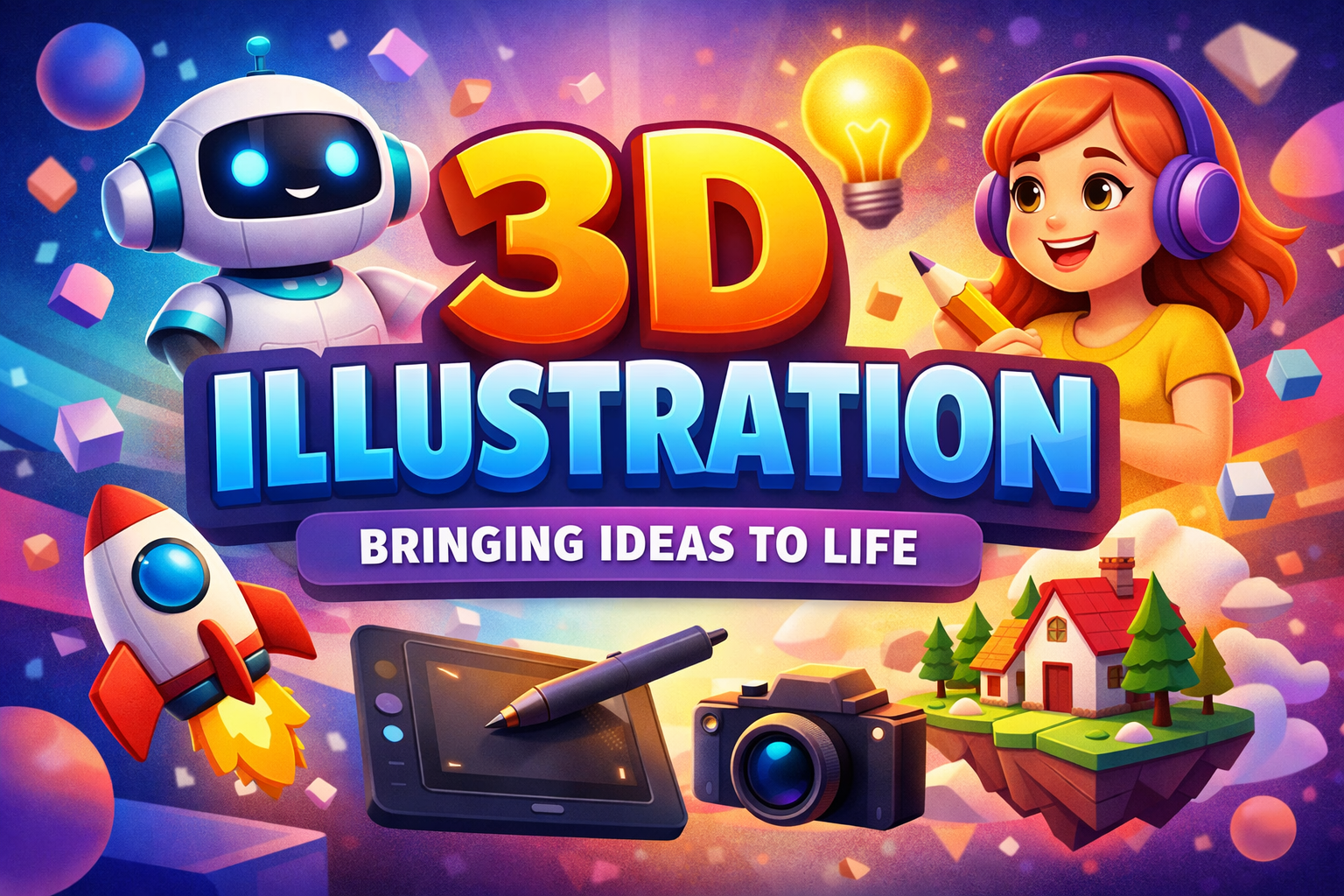
  • 3D Illustration: Bringing Ideas to Life Through Depth and Realism

    3D Illustration: Bringing Ideas to Life Through Depth and Realism

    In today’s fast-evolving digital landscape, visual storytelling has become one of the most powerful ways to communicate ideas. Among the many visual mediums available, 3D illustration stands out as a dynamic and immersive form of digital art that combines creativity, technology, and realism. From advertising campaigns and product visualization to animation and branding, 3D illustrations are transforming the way brands and creators present their ideas.

    What is 3D Illustration?

    3D illustration is the process of creating three-dimensional visual artwork using digital software. Unlike traditional 2D images, 3D illustrations have depth, lighting, texture, and perspective, making them appear more realistic and visually engaging.

    Artists use specialized software to model objects, apply materials, set lighting, and render scenes that can replicate real-world environments or completely imaginative worlds.

    This ability to control every element of a scene allows designers to produce visuals that are both creative and highly detailed.

    Why 3D Illustration is Becoming So Popular

    The demand for 3D illustration has increased dramatically in recent years, particularly in digital marketing and product design. Businesses are increasingly adopting 3D visuals because they offer a more immersive and visually compelling experience.

    Here are some reasons why 3D illustration is gaining popularity:

    Enhanced Realism
    3D illustrations can simulate real-world lighting, shadows, and materials, making visuals look incredibly lifelike.

    Creative Freedom
    Artists can create anything imaginable from futuristic environments to stylized characters without the limitations of physical photography.

    High Engagement
    3D visuals attract more attention and engagement on websites, social media, and advertisements compared to flat graphics.

    Versatility
    3D illustrations can be used in websites, product presentations, video games, advertising campaigns, and animation.

    Applications of 3D Illustration

    3D illustration is widely used across multiple industries because of its ability to communicate complex ideas visually.

    Product Visualization
    Brands use 3D illustrations to showcase products before they are even manufactured. This is particularly useful in industries like automotive, electronics, and consumer goods.

    Marketing and Advertising
    3D visuals create eye-catching promotional content that stands out in crowded digital spaces.

    Entertainment and Media
    Movies, games, and animated series rely heavily on 3D illustration for world-building and character design.

    Website and UI Design
    Modern websites often use stylized 3D graphics to create interactive and memorable user experiences.

    The Role of 3D Illustration in Branding

    Strong branding requires visuals that capture attention and communicate identity clearly. 3D illustrations allow brands to build unique visual styles that differentiate them from competitors.

    Companies often use 3D elements in:

    • Website hero sections
    • Social media campaigns
    • Product showcases
    • Promotional animations

    These visuals not only improve aesthetic appeal but also help brands build a memorable visual identity.

    The Future of 3D Illustration

    With advancements in rendering technology, real-time graphics, and artificial intelligence, the future of 3D illustration is incredibly promising. Industries such as virtual reality (VR), augmented reality (AR), gaming, and digital marketing are rapidly expanding their use of 3D visuals.

    As technology continues to evolve, 3D illustration will become even more accessible and integrated into everyday digital experiences.

    Conclusion

    3D illustration has become an essential tool in modern digital design. By combining artistic creativity with advanced technology, it allows creators to produce visually rich and engaging experiences that capture attention and communicate ideas effectively.

    For businesses, marketers, and creators, investing in high-quality 3D illustration is not just about aesthetics — it is about creating impactful visual stories that connect with audiences in a powerful way.

  • 2D Animation: Expressive and Story-Driven

    2D Animation: Expressive and Story-Driven

    2D animation is timeless and highly effective for storytelling. It allows creative freedom, expressive characters, and smooth visual narratives. Hand-drawn and digital 2D animations are ideal for explainer videos, social media content, educational videos, and brand stories.

    Because of its versatility and cost-effectiveness, 2D animation remains one of the most popular animation styles for marketing and online content.

  • What Is Animation and Why It Matters?

    What Is Animation and Why It Matters?

    Animation is the art of bringing visuals to life through motion. Whether it’s 2D animation, 3D animation, or hand-drawn animation, motion adds clarity, emotion, and impact to any message. Animated content is easier to understand, more memorable, and far more engaging than static designs or long blocks of text.

    Businesses that use animation often see higher engagement rates, better brand recall, and improved conversion rates. Animation helps simplify complex ideas and makes information visually appealing and easy to consume.

  • 2D vs 3D Animation: What Should Your Business Choose?

    Animation is no longer a “nice to have.” It’s dominating landing pages, paid ads, onboarding flows, SaaS explainers, and social media.

    The question isn’t whether to use animation.

    It’s what type.

    The 2D vs 3D decision isn’t about style preference it’s about brand positioning.

    2D Animation: Personality & Accessibility

    2D animation thrives on charm, storytelling, and relatability.

    It works exceptionally well for:

    • Explainer videos
    • Brand storytelling
    • Educational content
    • SaaS onboarding
    • Social media ads
    • Comic-style motion visuals

    Early on, Dropbox used simple, friendly 2D animations to explain cloud storage a complex idea at the time. The style felt approachable, not technical.

    2D makes brands feel human.

    It reduces friction.
    It simplifies complexity.
    It builds emotional connection.

    For startups and personality driven brands, 2D often outperforms high-gloss visuals because it feels accessible rather than intimidating.

    3D Animation: Depth & Premium Perception

    3D animation creates realism, texture, and physical presence.

    It’s ideal for:

    • Product showcases
    • Hardware demonstrations
    • High-end advertisements
    • Cinematic brand campaigns
    • Game trailers

    Look at Apple. Their 3D product animations elevate perception. Every reflection, material surface, and lighting choice signals precision and premium quality.

    3D builds authority.

    It makes products feel tangible even before customers touch them.

    Strategic Positioning Insight

    Here’s the real difference:

    2D builds personality.
    3D builds premium perception.

    But the smartest brands don’t blindly choose one they align animation style with business goals.

    If you’re selling emotion, education, or relatability → 2D may convert better.
    If you’re selling innovation, craftsmanship, or high-ticket products → 3D can justify price perception.

    Animation isn’t art for art’s sake.

    It’s a positioning tool.